
• ES
  • EN
Fundeps
  • About Fundeps
  • Team
  • Working areas
    • Environment
    • Democracy
    • Gender
    • Global Gorvernance
    • Health
  • News
  • Publications
  • DONATE
  • Click to open the search input field Click to open the search input field Search
  • Menu Menu
Democracy, Environment, News

Information requests for the Mitigation Plan of the Bajo Grande plant
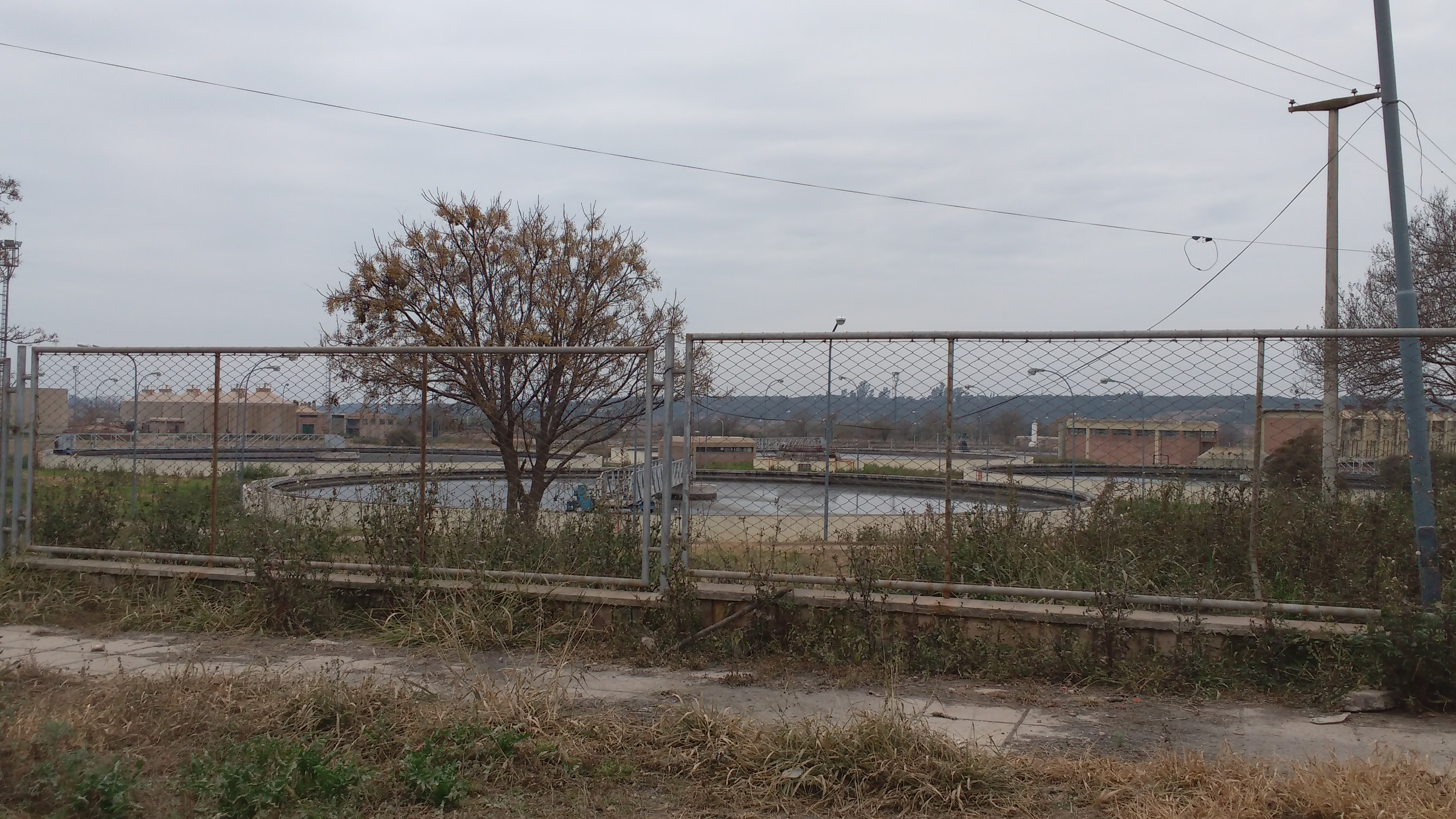
Last Friday, FUNDEPS together with Alida Weht, neighbor of the Chacras de la Merced district, presented information requests in the Municipality of Córdoba, in relation to the fulfillment of the Mitigation Plan implemented in the E.D.A.R. of Bajo Grande and in the area located downstream.

On April 24, 2017, the Municipality of Córdoba declared an environmental and sanitary emergency in the Wastewater Treatment Plant (E.D.A.R.) of Bajo Grande and in the area located downstream. He did it through Decree No. 1292 and it was for 180 days.

This is not the first time that the environmental and health emergency has been declared due to the plant’s malfunctioning and the existing contamination in the area of ​​Chacras de la Merced and downstream, which has been happening since 2014.

In fact, Mayor Ramón Javier Mestre, through Decree No. 2447, entrusted the different municipal departments with the necessary actions to implement the Mitigation Plan in the context of the environmental and health emergency, declared on August 5, 2014 and 180 days.

In June 2015, Decree No. 1220 once again declares the environmental and sanitary emergency of the plant for a period of 120 days, which is extended for an additional 120 days by Decree No. 3745 of December 2, 2015, to the aims of mitigating the environmental and sanitary effects until the optimization of the functioning of the plant.

Last year, due to new complaints from the employees of the Bajo Grande plant, which warn not only that the plant does not work at 100% capacity -requires improvements and essential repairs-, but that the sewage liquids are overturned without previous treatment to Rio Suquía -, added to the concern generated by the results of the samples taken by the Environmental Police and the laboratories of the plant itself, led to a new declaration of emergency by the Municipal Executive.

Likewise, Decree No. 1292 contemplates the fulfillment of a Mitigation Plan – continuation of the one prepared in 2014 – by virtue of which a number of measures and actions were entrusted to different areas of the Municipality of Córdoba, which were to be executed in complete by the end of October 2017.

For this reason, last Friday, FUNDEPS together with Alida Weht, neighbor of the Chacras de las Merced district and member of the Las Omas Civil Association, presented requests for information addressed to the Secretary of Government, Citizen Participation and Social Development; to the General Secretariat, the Public Services Secretariat, the Ministry of Health and the Secretariat of Planning and Infrastructure of the Municipality of Córdoba.

As for the mitigation measures contemplated in the plan, these are: a) Update of the socioeconomic survey of the affected population downstream of the plant; b) Update of the survey of the health status of the population; c) Distribution of safe drinking water for different uses in areas where provision by network is not possible; d) Preventive sanitary cord; e) Management of the effluents of the E.D.A.R. Under Large; e) Resource monitoring plan and f) Awareness campaign.

Also, this Tuesday we presented a request for information to the Secretary of Environment and Climate Change of the province, requesting updated information about the operation of the plant, the amount and condition of the sewage liquids upon entry and exit, as well as the treatment that they are made. At the same time, a report was required on the status and progress of the plant expansion works begun in 2017.

The contamination problem of the Bajo Grande plant is long-standing. Despite the complaints, complaints from NGOs and affected communities, technical reports and analyzes that account for the progressive deterioration of the Suquía River, and even a sentence of 2004 – with repeated requests for execution – which obliges the Municipality of Córdoba to minimize and mitigate environmental impacts in the area, the situation is only getting worse for the Suquía River and the populated areas that live downstream of the plant.

We hope that both the municipal and provincial authorities fulfill their duty to provide the required information in a timely manner, in order to ensure true access to public environmental information of citizens, as well as transparency and publicity of government actions.

More information

  • Decree No. 1292

Contact

María Pérez Alsina – mariaperezalsina@fundeps.org

1 de April de 2018
Share this entry
  • Share on Facebook
  • Share on X
  • Share on WhatsApp
  • Share on LinkedIn
  • Share by Mail
https://fundeps.org/wp-content/uploads/2018/03/IMG_20160624_142244248.jpg 0 0 Comunicaciones Fundeps https://fundeps.org/wp-content/uploads/2026/04/logo-2026-300x120.png Comunicaciones Fundeps2018-04-01 00:20:412024-06-30 16:03:10Information requests for the Mitigation Plan of the Bajo Grande plant

Tags

Access to Information Access to Justice BID Chinese Investments Citizen Participation Democracy ENTs Environment Environmental Democracy Gender Global Governance Health Healthy nutrition IFIs Infrastructure Financing Legal Interruption of Pregnancy Sexual and Reproductive Rights Social and Environmental Standards Tobacco Control Transparency
See all tags

Acuerdo de Escazú

Emergencia Agroquímica

MOCI - monitoreo ciudadano en proyectos de infraestructura

{el entramado} Contamos historias. Acercamos Realidades.

Instagram

fundepsargentina

Trabajamos para que se garanticen los derechos humanos 🌱⚖️🗣️🌈💜🚭🍎
Promovemos la equidad de #genero, el derecho a la #salud y un #ambiente sano.

🌎 Hace un año, la @corteidhoficial emitió su histó 🌎 Hace un año, la @corteidhoficial emitió su histórica Opinión Consultiva sobre la emergencia climática.

✊ Una victoria para quienes defienden el ambiente en América Latina y el Caribe: la Corte confirmó que proteger a las personas defensoras del ambiente no es opcional. Es una obligación legal.

⚖️ Para explicar qué exige esa protección, la Corte se apoyó en el Acuerdo de Escazú. Resultado: la gran mayoría de Estados de América Latina y el Caribe no pueden ignorar los estándares de Escazú, incluso si aún no han ratificado el tratado.

🔎 La implicación es clara: los países de la región deben fortalecer el acceso a la información, la participación pública, la justicia ambiental y la protección de quienes defienden el ambiente. 

📝 La Opinión abre nuevas rutas para frenar la criminalización de personas defensoras, responder a las restricciones al espacio cívico y defender la participación pública en países como Costa Rica, Guatemala y Perú. Compartimos el análisis de  @manizalmigrante del @ciel_org

📣 La discusión ya no es si los países de América Latina y el Caribe deben proteger a quienes defienden el ambiente. Eso ya está claro. Ahora hay que usar la Opinión: en tribunales, reformas, debates públicos y procesos de movilización para exigir mejores garantías y mayor protección.

🔗 Lee el análisis completo en el link en www.ciel.org/corte-idh-escazu-personas-defensoras/
Seguimos compartiendo algunos momentos del 3° Encu Seguimos compartiendo algunos momentos del 3° Encuentro Provincial de Redes de Compromiso y Cuidados 🧡

Creemos que no hay mejor manera de cerrar una jornada de formación, intercambio y construcción colectiva que encontrándonos también desde el arte. Porque la música y la poesía también nos invitan a imaginar otros mundos posibles.

Así vivimos Revuelo Sur, Íntimas, el espectáculo de Susy Shock junto al Dúo Bazán-Bonillo, que acompañó el cierre de este encuentro.

Gracias a todas las personas que se acercaron y fueron parte de esta jornada.
Preguntas, experiencias y saberes compartidos 💭 A Preguntas, experiencias y saberes compartidos 💭

Así vivimos el 3° Encuentro Provincial de Redes de Compromiso y Cuidados, una jornada dedicada a reflexionar sobre salud integral con perspectiva de diversidad y a fortalecer redes para la promoción de derechos.

Les compartimos algunos momentos de este encuentro que reunió a más de 170 personas de distintos puntos de la provincia.
El litio está en el centro de la transición energé El litio está en el centro de la transición energética global. Y Argentina, con los salares, principalmente de Jujuy, Salta y Catamarca, es protagonista de esa historia.

Pero hay preguntas que no siempre se hacen: ¿quién se beneficia realmente? ¿qué pasa con el agua? ¿qué derechos están en juego en los territorios donde se extrae?

Acá respondemos las más importantes. Accedé al documento completo en nuestra bio.
Follow on Instagram

Twitter

Tweets por @fundeps

Newsletter Subscription

    Fundeps. Córdoba (CP X5000JZH), Argentina. info@fundeps.org
    • Link to X
    • Link to Facebook
    • Link to Instagram
    • Link to Mail
    • Link to Youtube
    • Link to LinkedIn
    • Link to TikTok
    Link to: The Constitutional Court of Colombia rules in favor of the right to health and information Link to: The Constitutional Court of Colombia rules in favor of the right to health and information The Constitutional Court of Colombia rules in favor of the right to health and... Link to: We present comments on the draft treaty on business and human rights Link to: We present comments on the draft treaty on business and human rights We present comments on the draft treaty on business and human rights
    Scroll to top Scroll to top Scroll to top